
10 Iconic Noir Tropes Reimagined in The Solitaire Series
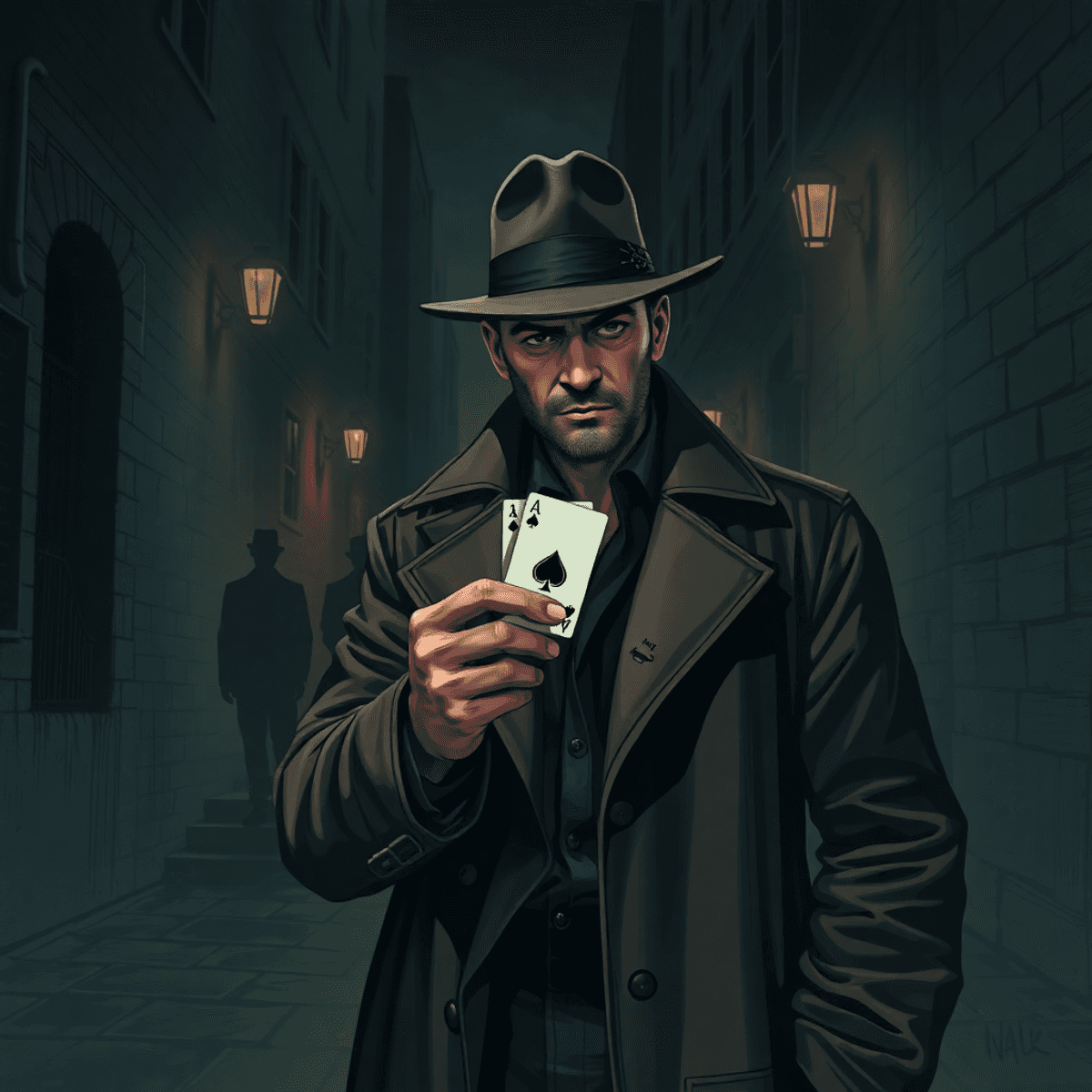
The noir genre, with its dark and brooding atmosphere, has long captivated audiences with its gritty portrayal of moral complexity and organized crime. In The Solitaire Series, these classic noir themes are reimagined through a unique lens of card-centered narratives that explore the darker aspects of human nature.
Noir is a genre characterized by its bleak settings, morally ambiguous characters, and complex narratives that delve into the more sinister elements of society. In The Solitaire Series, iconic noir elements such as solitary antiheroes, seductive women with hidden agendas (femme fatales), and corrupt systems of power are given new life within the world of organized crime and intricate symbolism found in playing cards.
Use the button below to check out the Solitaire Series in it's entirety, but also follow the links in the story to individual episodes to see these tropes in action.
1. The Lone Antihero Noir
The lone antihero is a key character in noir stories. This type of character is often alone, unsure about what is right or wrong, and deeply involved in corrupt activities. They usually exist outside of mainstream society, battling their personal weaknesses while moving through a world filled with crime and betrayal.
Alec, who appears in Episode 6: The Two of Spades, is a perfect example of this character type. At first, he seems like a man who relies solely on physical strength and instinct to survive. However, as the story progresses, we see that Alec is actually dealing with complex moral issues. His path reveals the struggle between staying loyal to his criminal connections and developing his own sense of right and wrong.
- Alec’s solitude emphasizes his outsider status.
- His choices reflect the tension between self-interest and reluctant heroism.
- The episode highlights how corruption permeates not just external systems but also his own conscience.
Alec’s portrayal adds depth to the noir tradition by combining physical strength with mental weakness, making him an intriguing representation of the lone antihero.
2. Moral Ambiguity and Emotional Scars
Noir thrives on moral ambiguity, where characters often navigate a world without clear right or wrong. This blurred morality creates psychological complexity, forcing choices that reveal emotional trauma beneath hardened exteriors.
Jack Bardlow Jr., as illustrated in Episode 18: The Three of Spades, embodies this trope through his tangled web of betrayal and loyalty. His decisions blur the lines between victim and perpetrator, exposing how past wounds shape present actions. Jack’s internal struggle highlights how emotional scars influence his judgment, casting doubt on his motives and alliances.
Key aspects of Jack Bardlow Jr.’s arc:
- Wrestling with past betrayals that haunt his conscience
- Making choices driven by survival, not morality
- Revealing vulnerabilities hidden beneath a tough facade
This exploration of psychological complexity deepens the noir narrative, showing characters trapped by their own histories as much as external forces.
3. Cards and Fate as Metaphor
In the Solitaire Series, the use of cards goes beyond mere gameplay; it serves as a powerful metaphor for fate and destiny, echoing classic noir storytelling elements in a unique way:
- Symbolic Objects: Cards are not just tools for games but symbolic objects representing the unpredictable nature of fate in the noir world.
- Metaphorical Significance: Each card drawn or played mirrors the characters' decisions and actions, hinting at the intertwined relationship between choices and consequences.
- Crazy Eights Game: The specific choice of the Crazy Eights game within the series adds layers to the metaphor, showcasing how individuals must navigate through chaos and uncertainty to survive.
The incorporation of cards as a metaphor for fate adds depth and complexity to the narrative, aligning with the overarching themes of unpredictability and inevitability in classic noir tales.
4. Femme Fatale Reimagined
The femme fatale archetype has long been a captivating figure in literature and film, embodying a mix of seduction, danger, and mystery. However, in The Solitaire Series, this classic character is reimagined and given new depth.
Evolution of the Femme Fatale
In the series, we see an evolution of the traditional femme fatale traits. While she still possesses an air of allure and charisma, her motivations are more complex and nuanced. Instead of being solely driven by personal gain or revenge, these characters often have larger goals in mind—such as challenging societal norms or seeking justice.
Subversion of Gender Roles
One of the most significant aspects of The Solitaire Series is its subversion of traditional gender roles. Through female empowerment, the narrative flips expectations on their head. Women who were once portrayed as passive objects of desire now take charge of their own destinies.
This shift not only adds richness to the story but also sends a powerful message about agency and autonomy. It challenges the notion that women must conform to specific roles defined by men.
Redefining Deception and Allure
Deception and allure have always been integral parts of the noir genre. In The Solitaire Series, however, these elements are redefined within its unique context. Rather than using manipulation solely for selfish purposes, characters employ it as a means to survive or fight against oppressive systems.
By exploring these themes through a feminist lens, the series offers fresh perspectives on familiar tropes. It invites viewers to question established narratives surrounding femininity while celebrating diverse representations of womanhood.
The reimagining of the femme fatale in The Solitaire Series serves as both homage to classic noir storytelling and critique of patriarchal structures. It showcases how empowering women can lead not only to individual transformations but also broader societal change.
5. Corrupted Power Structures
Power and corruption are central themes in noir storytelling, and The Solitaire Series explores these concepts through its portrayal of organized crime. The series reveals systemic decay within criminal empires, where loyalty is fragile and betrayal lurks behind every handshake.
- Power dynamics constantly shift as characters vie for control over territories and influence.
- Corruption seeps into every level, blurring the lines between law enforcement and criminals.
- Authority figures are often compromised, representing a world where rules serve the powerful rather than justice.
This depiction challenges traditional crime stories by showing that corruption isn't just about individual failures but an entrenched system that influences characters' decisions and destinies. In The Solitaire Series, survival relies on skillfully maneuvering through a dangerous web of alliances and betrayals, emphasizing noir's lasting interest in the sinister side of power.
6. Urban Decay and Exotic Settings
The urban decay and exotic settings play a crucial role in establishing the dark and mysterious atmosphere typical of the noir genre.
Setting Diversity
From desert locales reminiscent of existential despair to the backdrop of the Vietnam War era, the series explores a wide range of settings that add depth to the narrative.
The vibrant yet corrupt world of 1960s Las Vegas serves as a stark contrast between glitz and glamour on the surface and seedy underbelly hidden beneath.
By immersing viewers in these diverse and evocative settings, The Solitaire Series effectively captures the essence of classic noir while adding its unique twist to each location, enriching the storytelling experience for fans of the genre.
7. Fatalism and Inevitability
In the world of noir, fatalism reigns supreme, weaving a tangled web of destinies where characters are mere pawns in a grand scheme beyond their control. The Solitaire Series masterfully captures this essence by showcasing how fate dictates the paths of its protagonists, often leading them down dark and treacherous roads.
Characters grapple with the conflicting forces of destiny and free will, highlighting the constant struggle against an inevitable outcome. As they navigate through moral dilemmas and intricate plots, viewers are reminded of the inescapable nature of their fates, mirroring the classic noir theme of individuals being at the mercy of forces beyond their comprehension.
8. Complex Character Relationships
Noir narratives often delve into the intricacies of human connections, showcasing relationships that are anything but straightforward. These stories frequently feature interpersonal conflict, where characters grapple with their emotions and motivations, leading to intense confrontations and power struggles.
Betrayal is another common theme in noir, as characters navigate a web of deceit and hidden agendas. Loyalties are tested, and alliances can shift in an instant, leaving characters questioning who they can trust.
Additionally, noir tales often present loyalty dilemmas, forcing characters to make difficult choices between their personal interests and their obligations to others. These moral quandaries add depth to the narrative, as characters wrestle with conflicting loyalties and the consequences of their decisions.
Through these complex character relationships, noir stories explore the darker aspects of human nature, highlighting the fragility of trust and the complexities of love and friendship.
9. Shadowy Visual and Narrative Style
The Solitaire Series masterfully adapts classic noir aesthetics to its unique storytelling approach.
The visual style of the series embraces shadows and lighting contrasts to create a brooding atmosphere reminiscent of classic film noir.
Each scene is meticulously crafted to evoke a sense of mystery and intrigue, drawing viewers into a world shrouded in darkness.
The narrative tone mirrors the ambiguity and suspense typical of traditional noir narratives, keeping audiences on the edge of their seats.
10. Finding Hope in Darkness
One of the most powerful elements in The Solitaire Series is the redemption arc. While many noir stories are dark and hopeless, this series breaks that trend by showing characters who can grow and change despite their difficult circumstances.
In noir stories, things are usually pretty gloomy, and it feels like there's no chance for a happy ending. But The Solitaire Series flips that idea on its head. It shows us that even when everything seems lost, people can still find ways to better themselves and make choices that lead them down a different path.
Here are some ways this theme is portrayed in the series:
- Struggles with the past: Characters in the series grapple with their previous actions and decisions. They may have made mistakes or committed crimes, but they also have moments of self-reflection where they recognize the impact of those choices.
- Acts of kindness: Throughout the story, there are instances where characters go out of their way to help others or make sacrifices for someone else's benefit. These acts serve as reminders that even in a world filled with darkness, compassion and empathy can still exist.
- Capacity for change: The series emphasizes that people have the ability to transform themselves, regardless of their surroundings. It challenges the notion that one's environment completely determines their fate by showcasing individuals who rise above corruption and strive for something better.
Jack Bardlow Jr., one of the main characters, perfectly embodies this theme. His internal struggles reveal a deep desire to escape the cycle of crime and violence he's caught up in. He longs for a life free from those burdens—one where he can be truly happy and fulfilled.
The series doesn't shy away from complexity; it understands that darkness doesn't automatically erase any chance at redemption. Instead, it presents a more realistic portrayal of human nature—where flaws coexist with virtues, and hope flickers even in the bleakest moments.
10 Iconic Noir Tropes Reimagined in The Solitaire Series ends on an uplifting note by highlighting this nuanced perspective on character development. It reminds us all that no matter how harsh or unforgiving these noir worlds may seem, there's always room for growth and second chances—like a faint but persistent light cutting through the shadows.
FAQs (Frequently Asked Questions)
What are the defining characteristics of the lone antihero trope in The Solitaire Series?
The lone antihero trope in The Solitaire Series is embodied by Alec, who represents the classic noir archetype of moral uncertainty and corruption. His journey, particularly in Episode 6: The Two of Spades, showcases a transformation from relying on brute strength to confronting complex moral dilemmas, highlighting the series' modern take on this iconic noir character.
How does The Solitaire Series explore moral ambiguity and emotional scars through its characters?
The series delves into blurred morality and psychological complexity through characters like Jack Bardlow Jr., featured in Episode 18: The Three of Spades. His narrative arc involves themes of betrayal and emotional trauma, reflecting the noir genre's focus on flawed individuals grappling with their internal conflicts and moral uncertainties.
In what ways are cards used as metaphors for fate and destiny in The Solitaire Series?
Cards serve as powerful symbolic objects throughout The Solitaire Series, representing fate and destiny within its organized-crime narrative. For instance, the Crazy Eights game is a recurring motif that underscores themes of chance, control, and inevitability, reimagining classic noir tropes through a unique card-centered storytelling approach.
How is the femme fatale trope reimagined in The Solitaire Series?
The Solitaire Series transforms the classic femme fatale archetype by infusing it with elements of female empowerment alongside traditional traits of deception and allure. This reimagining adds depth to female characters, challenging conventional noir stereotypes while maintaining the intrigue and complexity associated with this iconic trope.
What role do corrupted power structures play in the narrative of The Solitaire Series?
Corrupted power structures are central to The Solitaire Series, highlighting themes of organized crime, systemic decay, and shifting power dynamics. This exploration reflects classic noir concerns with corruption and moral decay within societal institutions, providing a gritty backdrop that intensifies the series' dramatic tension.
How does setting contribute to the noir atmosphere in The Solitaire Series?
Settings such as urban decay environments, desert shows, Vietnam War-era scenes, and 1960s Las Vegas play a crucial role in establishing the noir atmosphere in The Solitaire Series. These diverse and exotic locations enhance the mood by emphasizing themes of decline and moral ambiguity integral to modern noir storytelling.